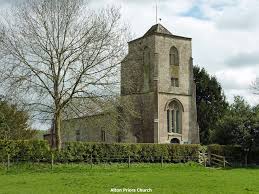
Much of the history of the church involves the Button family who were lords of the manor from the 13th century until the 17th century. On the floor at the west end of the nave is a brass commemorating Agnes Button who died in 1528. Her husband William who survived her by nearly 20 years was a Member of Parliament and had a chequered career, being briefly imprisoned in the Tower of London in 1538 before regaining the favour of Thomas Cromwell who referred to him as his “loving servant”. Their son, also William, was like his father a Member of Parliament and a supporter of the Seymour family (see Wolf Hall). He died in 1590 and there is a tomb chest in the chancel where he and his wife Mary are buried. Above the tomb is a brass with an angel blowing the ‘last trump (when) the dead shall be raised’. The brass was erected in the 17th century by his son, another William, who was only six when his father died. He was later knighted and became High Sheriff of Wiltshire.
All Saints became redundant in 1972 and is now in the care of The Churches Conservation Trust. It is open daily, usually between 10am and 4pm. The church can be accessed by a footpath leading across the fields from its neighbouring church of St Mary the Virgin in Alton Barnes. St Mary’s is a charming small church built in the 10th century and mentioned in Domesday Book. Listed Grade 1, it was largely restored in 1904 but retains earlier features including its 16th century roof beams and an 18th century triple-decker pulpit. The box pews in the nave are 19th century. The chancel was rebuilt in 1748 and there are glass engravings by Laurence and Simon Whistler in its windows.